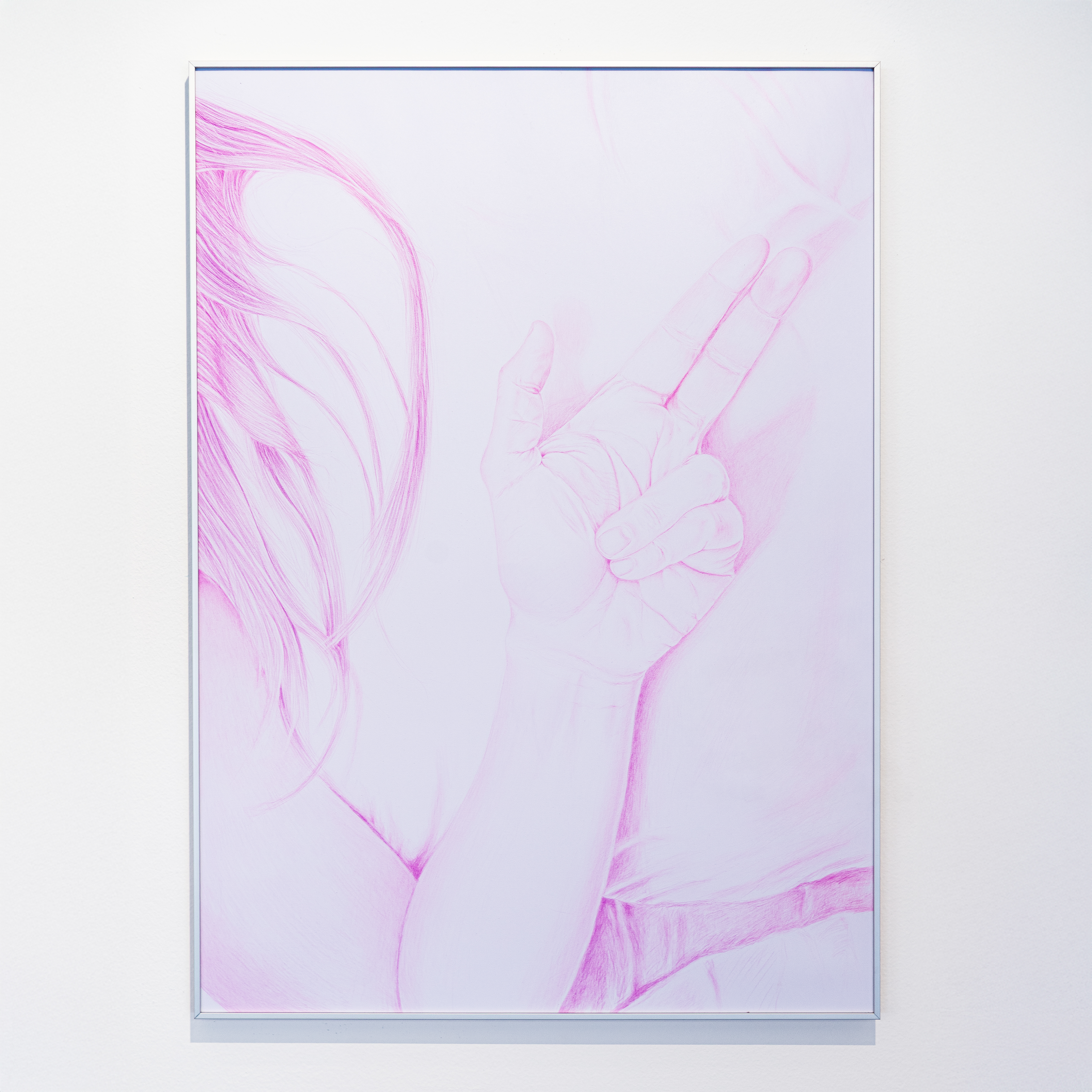


Matite colorate su carta, 50 × 70 cm – 2025
Osservando invece “come” la stampa tratta le guerrigliere si può affermare, questa volta senza ombra di dubbio, che a esse è riservato un trattamento “impolitico”. Non si spendono parole di analisi, non si richiamano categorie generali, paragoni storici con altri paesi, si ricorre e si gioca per lo più l’attacco personale che non trascura gli elementi sessuali. Le guerrigliere son tutte “pasionarie”, “valchirie”, “BB del mitra” o “segretarie delle BR” che “maneggiano la pistola come se facessero l’amore”. La loro scelta, poi, appare e resta inspiegabile dato che la motivazione politica viene riservata e contestata solo ai loro compagni maschi. Si insiste sull’aspetto di normalità e tranquillità di queste donne “prima” della scelta senza ritorno. Brigatiste e Nappiste sono state tutte un tempo brave ragazze, figlie affezionate, spesso pie, studiose, timide, generose, ricordate da tutti, amici, parenti, compagni di scuola, con affetto particolare. Poi improvvisamente e senza alcun motivo apparente, il traviamento, la svolta, come una specie di “botta in testa”. La brava fanciulla non si riconosce più. Pensierosa, misteriosa, sfuggente, insomma trasformata: ha scelto la guerriglia.
Ida Faré e Franca Spirito,
Mara e le altre, Feltrinelli, 1979
Colored pencils on paper, 50 × 70 cm – 2025
Observing instead “how” the press portrays female guerrillas, one can state, without any doubt, that they are subjected to an “unpolitical” treatment. No analytical language is used, no general categories or historical comparisons with other countries are invoked; instead, the discourse mostly relies on personal attacks that do not shy away from sexual elements. Female guerrillas are all described as “pasionarias”, “valkyries”, “BBs with machine guns” or “Red Brigades secretaries” who “handle the gun as if they were making love”. Their choice is portrayed as inexplicable, since political motivation is acknowledged and debated only in relation to their male comrades. Emphasis is placed on the normality and tranquility of these women “before” their irreversible choice. Brigadists and NAP members were once all good girls, affectionate daughters, often pious, studious, shy, generous, remembered with particular affection by friends, relatives and schoolmates. Then suddenly, without any apparent reason, comes the deviation, the turning point, like a blow to the head. The good girl is no longer recognizable. Thoughtful, mysterious, elusive—transformed: she has chosen guerrilla warfare.
Ida Faré and Franca Spirito,
Mara and the Others, Feltrinelli, 1979